
Analytical Hypnotherapy
What Is Analytical Hypnotherapy?
Analytical Hypnotherapy looks beyond the immediate symptom and explores the emotional patterns, experiences and meanings that may be contributing to it.
People often come to therapy wanting something to stop: anxiety, panic, overthinking, a phobia, people-pleasing, low confidence or a reaction that seems out of proportion to what is happening now.
The symptom matters.
But sometimes the more useful question is not simply:
“How do I stop feeling this?”
It is:
“Why does this response make sense to me?”
Analytical Hypnotherapy is one way of exploring that question.
Looking Beneath the Present Reaction
A reaction that seems irrational in adult life may have developed for understandable reasons.
Someone who became highly aware of other people’s moods may once have needed to notice small changes in atmosphere.
Someone who finds it difficult to disappoint others may have learned that approval, harmony or acceptance depended on being agreeable.
Someone who reacts strongly to criticism may have spent years feeling that mistakes carried more emotional weight than they do now.
None of these examples means that one experience automatically causes one adult difficulty.
People respond differently to similar circumstances, and present-day problems usually have more than one contributing factor.
The purpose of analytical work is not to force a neat explanation onto someone’s life.
It is to understand the pattern more clearly.
There is often a reason a response developed, even when that reason is no longer obvious.
Why Use Hypnosis?
Hypnosis provides a different way of focusing attention.
Rather than trying to consciously think our way through everything, the person is encouraged to become more absorbed in their internal experience — thoughts, feelings, imagery, associations and emotional responses.
Dave Elman, whose work had a significant influence on modern hypnotherapy, described hypnosis as:
“Hypnosis is a state of mind in which the critical faculty of the human is bypassed, and selective thinking established.”
— Dave Elman
Elman used the term critical faculty to describe the part of our thinking that evaluates, questions and judges information against what we already believe to be true.
His language belongs to an earlier period in the development of hypnotherapy, and it should not be understood as suggesting that a literal part of the brain is switched off.
You do not lose your judgement or control.
A more useful way of thinking about it is that hypnosis creates a focused state in which we temporarily become less occupied with analysing every thought and more able to notice what arises internally.
You remain aware of what is happening throughout.
You can speak, think, question what is happening or stop at any point.
From Experience to Meaning to Pattern
Analytical Hypnotherapy is interested not only in what happened, but in what the experience came to mean to the person.
Two people may go through apparently similar situations and take very different things from them.
A child who experiences frequent criticism might conclude:
“I have to get things right.”
Another might conclude:
“Whatever I do will never be good enough.”
Another person may not attach the same emotional meaning to the experience at all.
Those conclusions influence what happens next.
The belief that mistakes are dangerous may contribute to perfectionism.
Fear of rejection may contribute to people-pleasing.
A sense that the world is unpredictable may contribute to remaining constantly alert.
The original circumstances may disappear while the pattern continues.
Analytical Hypnotherapy explores the connection between:
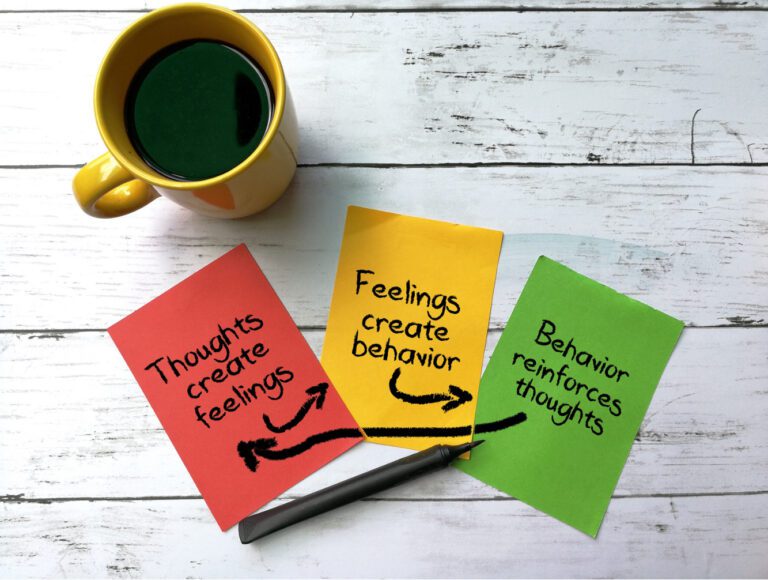
what happened → what it meant → how you adapted → how that adaptation is affecting you now
What Once Helped May Later Restrict Us
Many emotional patterns begin as ways of coping.
Avoiding conflict may once have felt safer.
Being highly responsible may have brought approval.
Keeping feelings to yourself may have reduced the possibility of criticism or rejection.
Staying alert may have helped you anticipate what was coming next.
These responses are not necessarily weaknesses.
They are often adaptations to what was happening at the time.
The difficulty arises when the same response continues automatically in circumstances where it is no longer needed.
What once helped us cope may later become the thing that restricts us.
Analytical Hypnotherapy explores that difference.
What Happens in Analytical Hypnotherapy?
There is no fixed script that every person follows.
The work begins with what is happening for you now.
We might explore what triggers the difficulty, what you feel emotionally and physically, what thoughts accompany it and whether the same pattern appears in other parts of your life.
Hypnosis may then be used where appropriate to pay closer attention to emotional responses, imagery, associations or earlier experiences connected with the pattern.
The purpose is not to go searching for memories simply because they are in the past.
It is to follow what appears relevant to the difficulty you are experiencing now.
Sometimes an earlier experience becomes important.
Sometimes the work remains much more focused on the present.
Methods are chosen for the person, not the diagnosis.
What About Memories That Arise During Hypnosis?
This is an important distinction.
Hypnosis should not be treated as a method for discovering an unquestionable historical record of what happened.
Human memory is reconstructive. What we remember is influenced by emotion, interpretation, later experiences and the way memories are recalled.
For that reason, something remembered during hypnosis should not automatically be treated as literal historical fact.
In therapy, the emotional meaning may be more relevant than establishing every factual detail.
The useful question is often:
“What did this experience come to mean to me?”
Perhaps it contributed to a belief that you were not good enough.
That other people could not be trusted.
That expressing emotion was unsafe.
That you had to keep everyone happy.
Or that being in control was the only way to feel secure.
Analytical work explores how those meanings developed and whether they are still influencing the way you respond today.
Analytical Hypnotherapy Is Not About Blaming the Past
Understanding earlier experiences does not mean blaming childhood, parents or previous relationships for everything that happens in adult life.
Nor does it mean that every difficulty has one hidden root cause waiting to be discovered.
Human behaviour is more complex than that.
Current circumstances, relationships, temperament, physical health, stress and learned patterns all contribute to how we feel and respond.
Analytical Hypnotherapy is interested in the past where it helps us understand the present.
The question is not simply:
“What happened to me?”
It is also:
“What did I learn from what happened, and how is that learning affecting me now?”
How Analytical Hypnotherapy Fits Into My Work
Analytical Hypnotherapy is one of the approaches I use as a Clinical Hypnotherapist and Psychotherapist.
It may sit alongside Psychodynamic Psychotherapy, Clinical Hypnotherapy, Regression Therapy or CBT – Enhanced with Hypnotherapy, depending on the person and what is happening for them.
Some people benefit from exploring earlier emotional patterns.
Others need greater attention on present-day thoughts, behaviours, relationships or practical ways of responding differently.
Often the work includes both.
There is no requirement to fit the person into a particular method.
Methods are chosen for the person, not the diagnosis.
Understanding Before Changing
People are often very good at judging their own reactions.
They tell themselves they are too sensitive, too anxious, too needy, too controlling or that they simply need to “get over it”.
Understanding provides a different starting point.
Instead of asking:
“What is wrong with me?”
we begin to ask:
“Why might this response have developed?”
That does not mean accepting every pattern indefinitely.
It means understanding what the response was doing, why it persisted and whether it is still needed now.
Analytical Hypnotherapy is ultimately about making sense of the response rather than fighting it without understanding it.
Because when we understand how a pattern developed, we begin to see the difference between what was needed then and what is needed now.